FOR INTERNATIONAL SCHOOLS
Developing Human Capabilities Students Will Use for Life
Schools prepare students with knowledge for the future. Soft Power Skills complements that work by developing the human capabilities students need to put that knowledge into action.
Through experiential learning, students practice leadership, teamwork, communication, decision-making, self-awareness, adaptability, and the ability to work effectively with people who may think, communicate, and respond differently.
They don't just learn about these capabilities.
They practice them.
INSPIRE. EMPOWER. CHANGE!
Why Soft Power Skills?
From Knowledge to Positive Impact
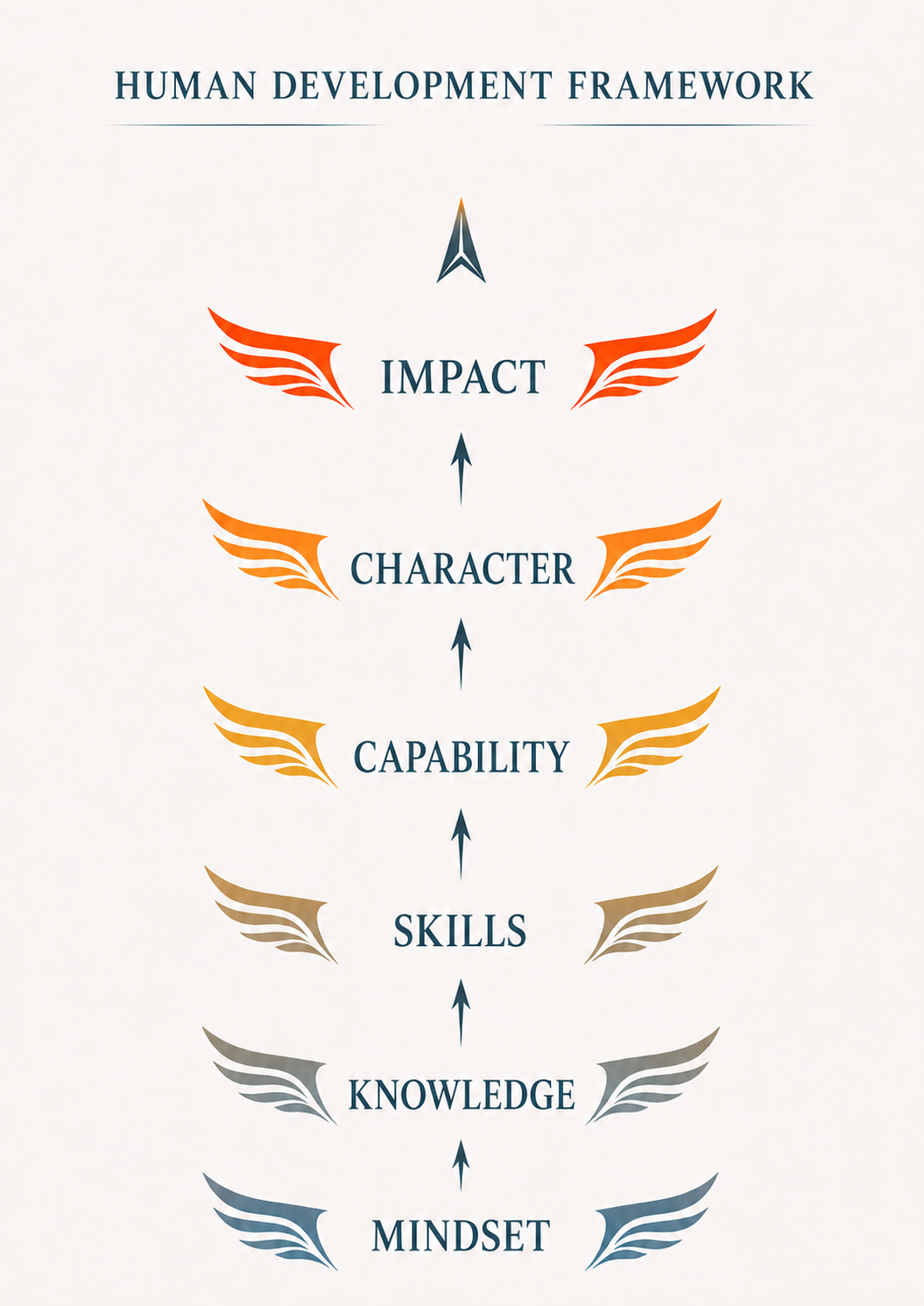
Mindset: How we approach learning, challenge, growth, and possibility.
Knowledge: What we know and understand.
Skills: The specific behaviors and techniques we learn and practice.
Capability: Applying and integrating what we know and can do to accomplish goals in real situations.
Character: How we choose to use what we are capable of doing—with judgment, responsibility, fairness, integrity, and courage.
Impact: The difference our actions make for ourselves, other people, teams, and communities.
Academic knowledge matters. But applying knowledge in real situations—amid the complexities of human interaction and changing circumstances—requires more than accumulated facts.
Leadership becomes meaningful when someone must actually lead. Communication becomes meaningful when people misunderstand one another. Decision-making becomes difficult when information is incomplete, emotions are involved, or people disagree. Character becomes visible when doing the right thing requires judgment or courage.
Soft Power Skills develops these capabilities through a Human Development Framework that connects what students think and know with what they are ultimately able and willing to do.
A presentation can introduce an idea. An experience can make it real.
Soft Power Skills workshops use challenging activities, simulations, discussions, role play, self-assessment, reflection, and practical problem-solving to give students something meaningful to think about—and something they can use afterward.
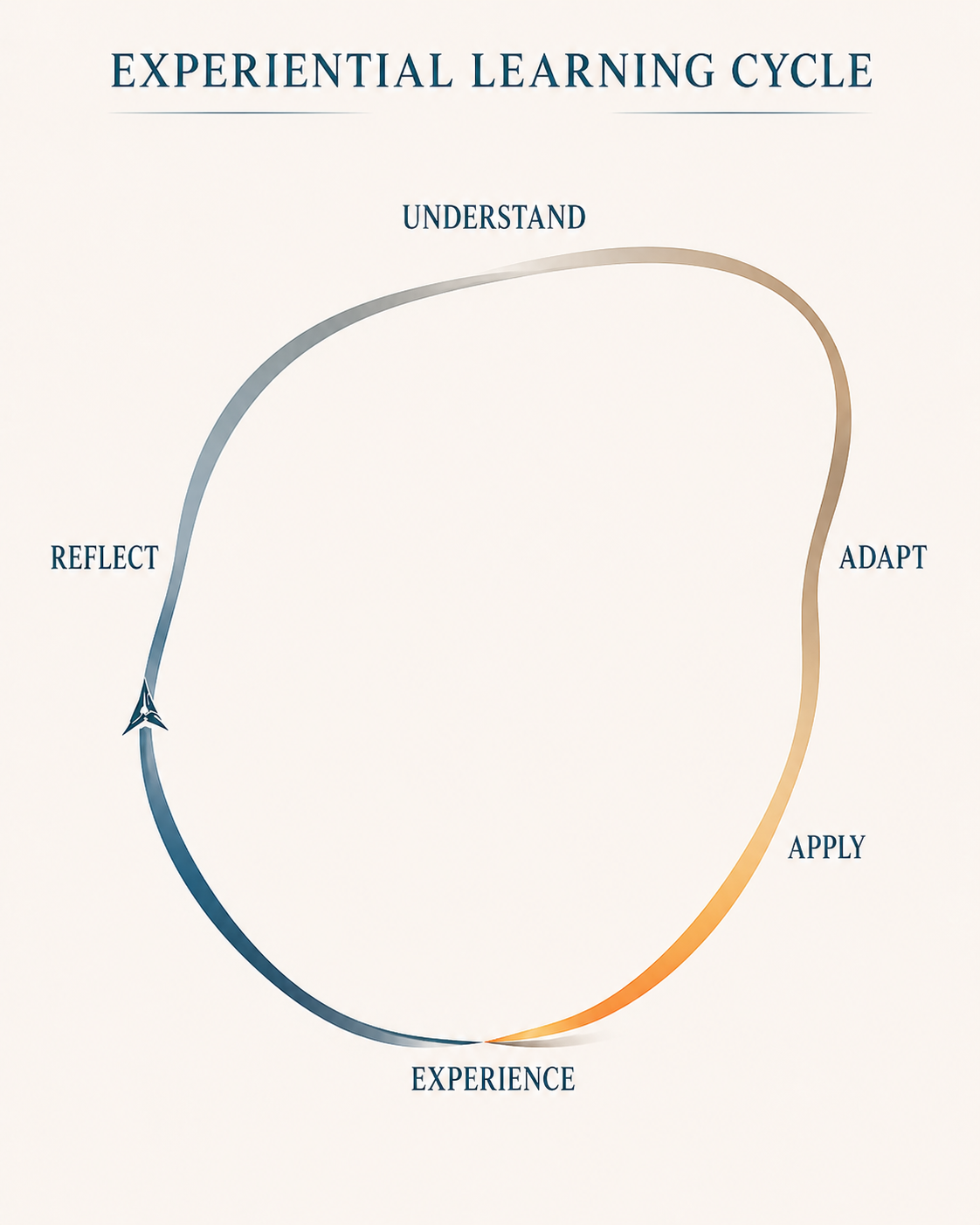
Our learning process follows the Soft Power Skills Experiential Learning Cycle:
People Learn by Doing
Students experience something, examine what happened, make sense of it, consider what they might change, and apply the learning in another situation.
The activity creates the experience.
The debrief turns experience into learning.
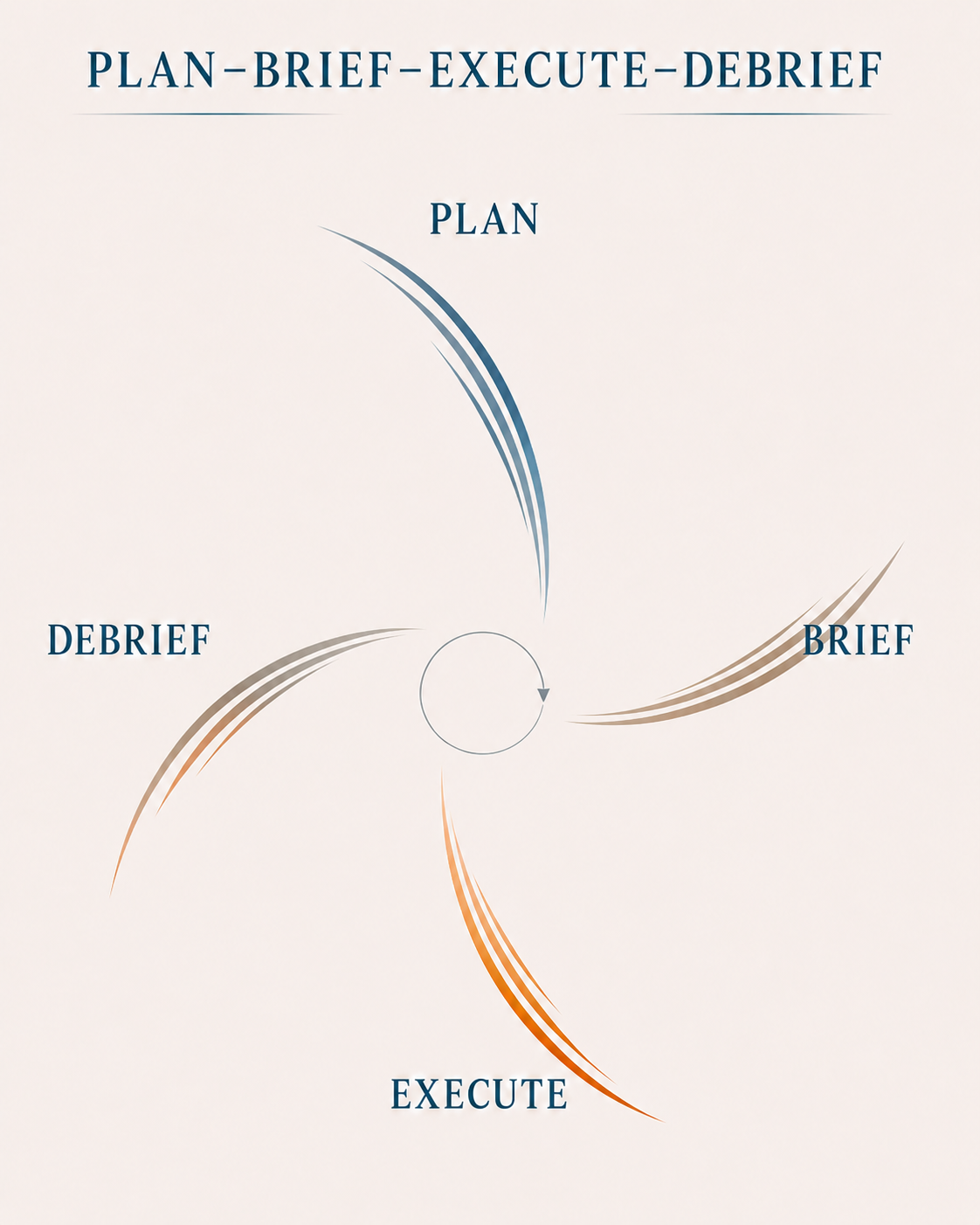
Plan. Brief. Execute. Debrief.
For team challenges, students may also use a simple continuous-improvement process:
A plan is a starting point.
Once action begins, assumptions meet reality.
Teams communicate, notice what is happening, adapt, and then examine their performance.
What worked? What didn't? Why? What would we do differently next time?
Then they try again.
The Experiential Learning Cycle describes the broader process of learning from experience. PBED is a practical tool for helping teams plan, perform, learn, and improve.
Flexible Formats for Different School Goals
Soft Power Skills can support a single focused need or build capability progressively over time.
Focused Workshops
Best for a defined learning objective, year-group session, leadership topic, advisory period, enrichment program, or targeted skill need.
60-120 Minutes
Leadership & Teamwork Experiences
Best when students need sustained practice through team challenges, changing roles, problem-solving, communication, reflection, and debriefing.
Half Day or Full Day
Leadership Development Series
Multiple Sessions • Semester • Customized
Best when a school wants development over time, with repeated practice, feedback, reflection, application, and increasingly complex challenges.
The right format depends less on time available than on the depth of change the school wants to create.
Six Ways to Develop Human Capability
1. Leadership in Action
Leadership is something you do.
Students discover how teams become more effective by tackling challenges in which plans must be made, ideas communicated, decisions taken, responsibilities shared, and approaches adapted.
Experiential team challenges make leadership behavior visible. Structured debriefs then help students examine what actually happened—and what they would do differently next time.
Soft Power Skills organizes student development around six complementary workshop families, each focused on a core area of human capability while contributing to a coherent developmental system.
Students explore: Leadership • Teamwork • Planning • Communication • Situational Awareness • Adaptability • Responsibility • Debriefing
2. Leading Yourself
Effective leadership begins with understanding yourself.
Students explore who they are becoming, what matters to them, how their habits and priorities shape their actions, and how they can turn good intentions into purposeful behavior.
Activities include self-assessment, reflection, goal setting, prioritization, time management, habit development, accountability, and personal action planning.
The objective isn't to put students into personality boxes. It is to give them better language for understanding themselves—and greater agency over what they do next.
Students explore: Mindset • Self-Awareness • Purpose • Personality • Goals • Habits • Priorities • Time Management • Accountability • Reflection • Impact
3. Communicating Effectively
Communication is more than getting your message across.
Students practice listening to understand, expressing ideas clearly, asking better questions, giving and receiving useful feedback, and working through disagreement without unnecessarily damaging relationships.
Through exercises and school-relevant scenarios, they experience how easily messages can be misunderstood—and how curiosity, clarity, feedback, and constructive challenge can change the conversation.
Students explore: Listening • Clear Communication • Better Questions • Giving & Receiving Feedback • Perspective • Constructive Challenge • Difficult Conversations • Conflict Resolution • Speaking Up
4. Building Trust and Stronger Teams
Every student helps create the climate of the group.
Strong teams depend on more than cooperation. Students need to feel that they can contribute, ask for help, make mistakes, disagree respectfully, and speak when something does not seem right.
Students explore how trust is built and damaged, how group norms spread, and how belonging, fairness, accountability, peer pressure, cliques, gossip, bullying, and bystander behavior can affect the people around them.
Most importantly, they consider their own agency:
What kind of team, classroom, or community do my actions help create?
Students explore: Trust • Teamwork • Belonging • Inclusion • Voice • Fairness • Accountability • Peer Pressure • Speaking Up • Courage
5. Making Better Decisions
Good decisions require more than intelligence.
The way we see a problem can be influenced by assumptions, framing, emotions, previous experiences, group dynamics, and cognitive biases.
Students encounter situations in which their first interpretation may not be the only one. They learn practical ways to slow down when necessary, challenge assumptions, seek alternatives, consider different perspectives, and prepare for the possibility that they may be wrong.
The goal is not to eliminate cognitive bias. It is to become a more deliberate thinker and decision-maker.
Students explore: Assumptions • Cognitive Bias • Critical Thinking • Framing • Alternatives • Constructive Dissent • Decision Tools • Learning From Outcomes
6. Leading Across Cultures
Culture gives us clues, not conclusions.
International-school students live and learn among people shaped by different languages, families, countries, communities, traditions, personalities, and experiences.
Leading Across Cultures develops the curiosity and perspective needed to work effectively across those differences. Students examine how perception influences interpretation, how communication styles can differ, and why behavior that seems obvious from one perspective may look very different from another.
They also create a Cultural Influence Map—a visual exploration of the people, places, languages, traditions, media, and experiences that have helped shape who they are becoming.
The objective is to become better at noticing, asking, listening, learning, and adapting.
OBSERVE → INTERPRET → ASK → LEARN
Students explore: Perception • Cultural Influence • Communication • Perspective • Trust • Disagreement • Adaptability • Identity • Global Leadership
Developing Student Leaders
Leadership Development Workshop
The Challenge
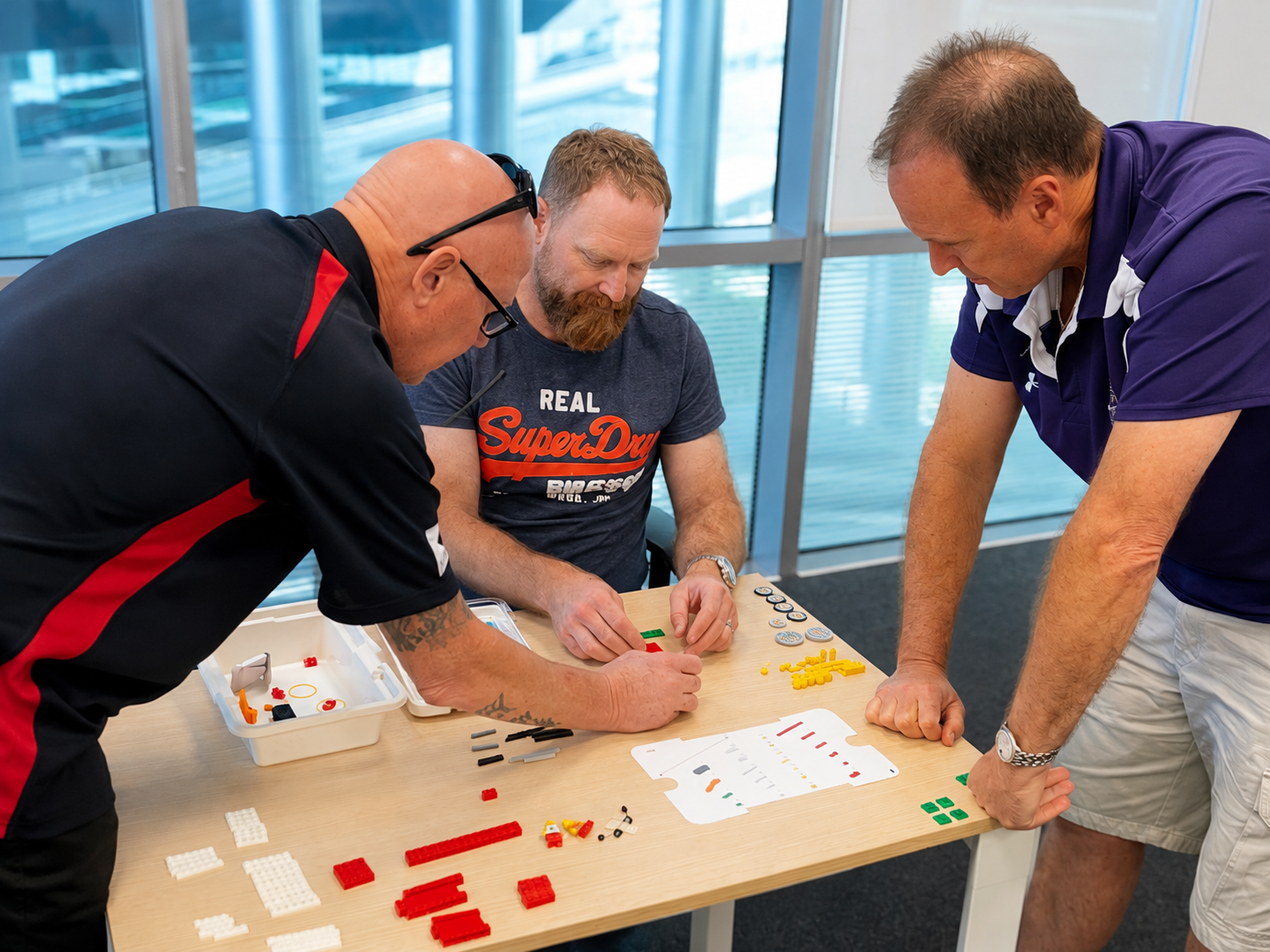
Small teams receive limited materials, limited time, and a clear objective: plan and build the tallest compliant structure.
Plan & Brief
Ideas emerge. Teams develop an approach, decide roles, allocate resources, and establish a shared understanding of what they intend to do.
Execute
Then the plan meets reality. Assumptions are tested. Ideas compete. Problems emerge. Time disappears. People contribute in different ways. Teams must notice what is happening and adapt.
Debrief
What worked? What didn't? Why? Who contributed—and who didn't get heard? How were decisions made? What happened when somebody disagreed?
Try Again
Teams update the plan and attempt the challenge again. Now reflection becomes application.
The tower isn't the lesson.
What happens next is.
A Challenge in Action
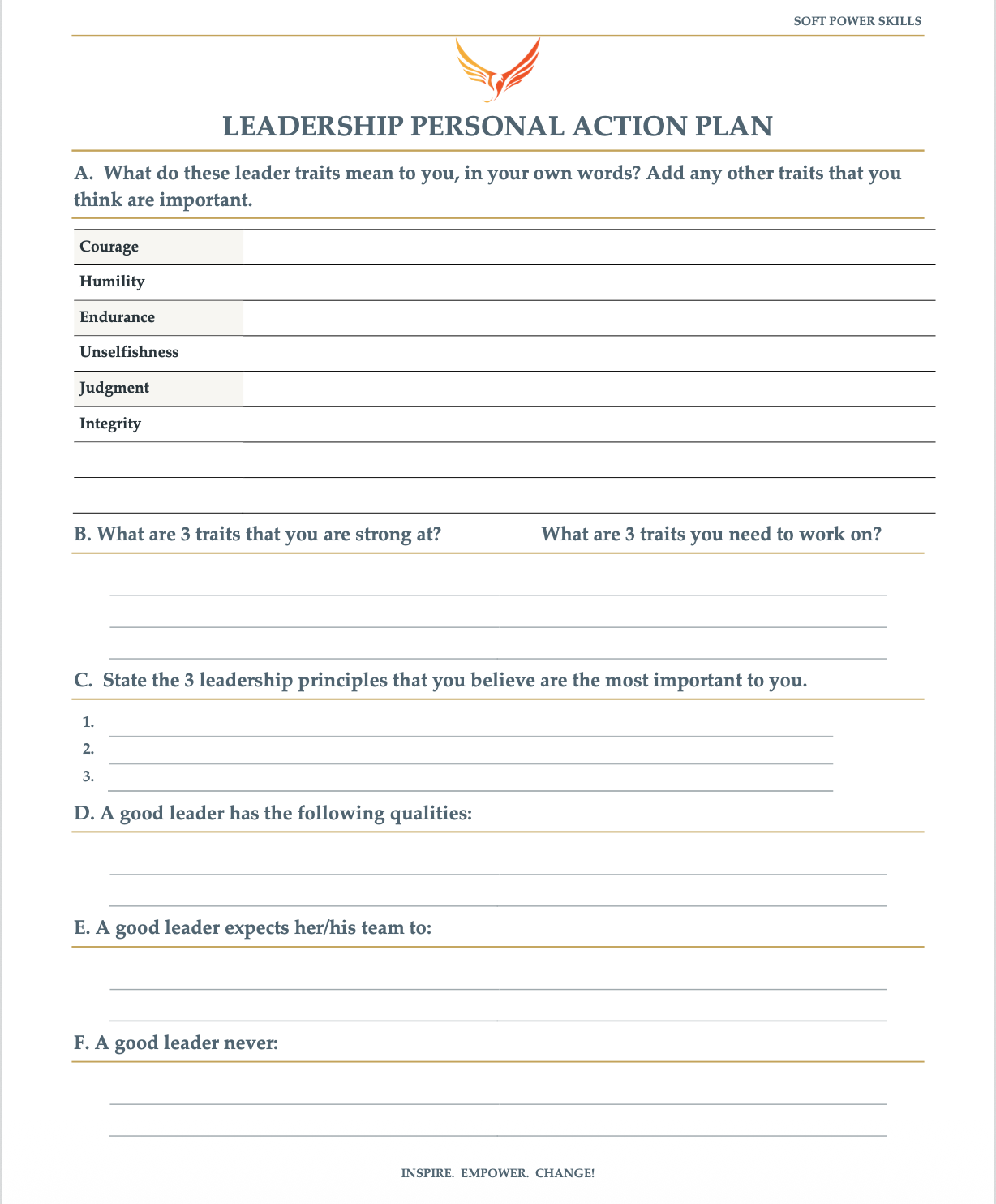
Tools Students Can Take With Them
The best learning continues after the activity ends.
Soft Power Skills workshops give students practical tools they can continue using to reflect, make decisions, plan, communicate, and learn from experience.
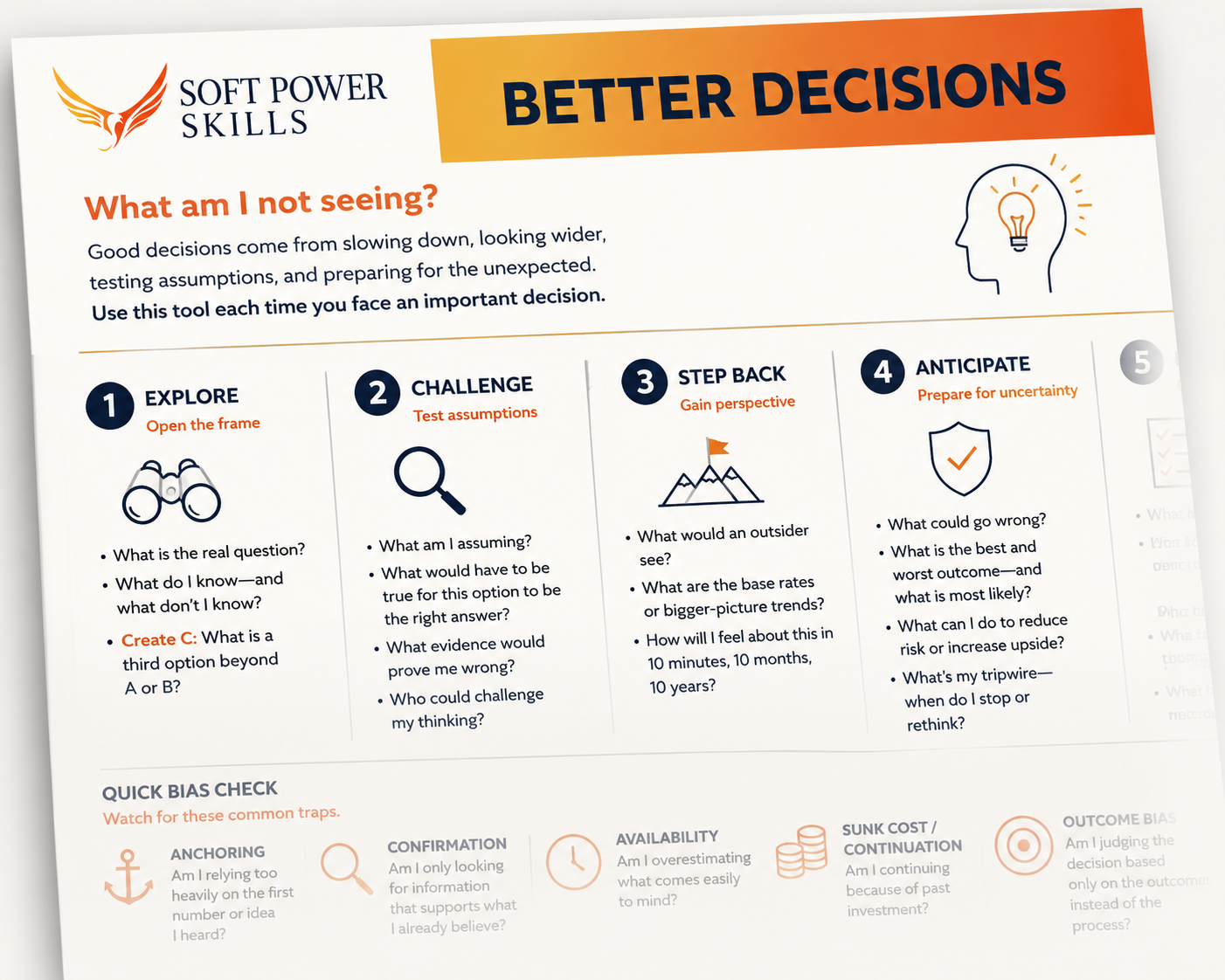
Better Decisions
Practical questions and tools for examining assumptions and broadening choices.
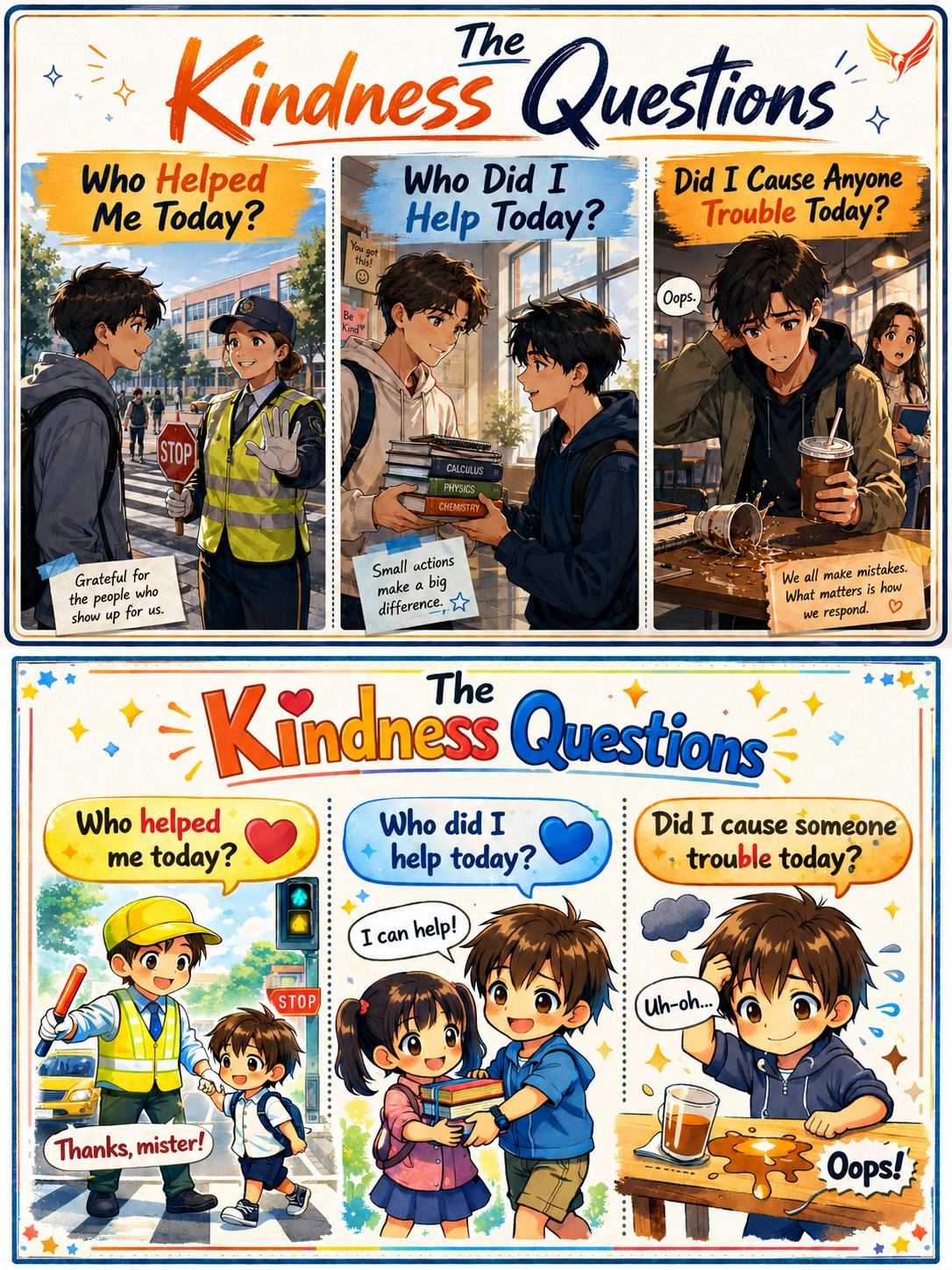
Kindness Questions
A simple reflection on the help we receive, the help we give, and the impact our actions have on others, tailored to age.
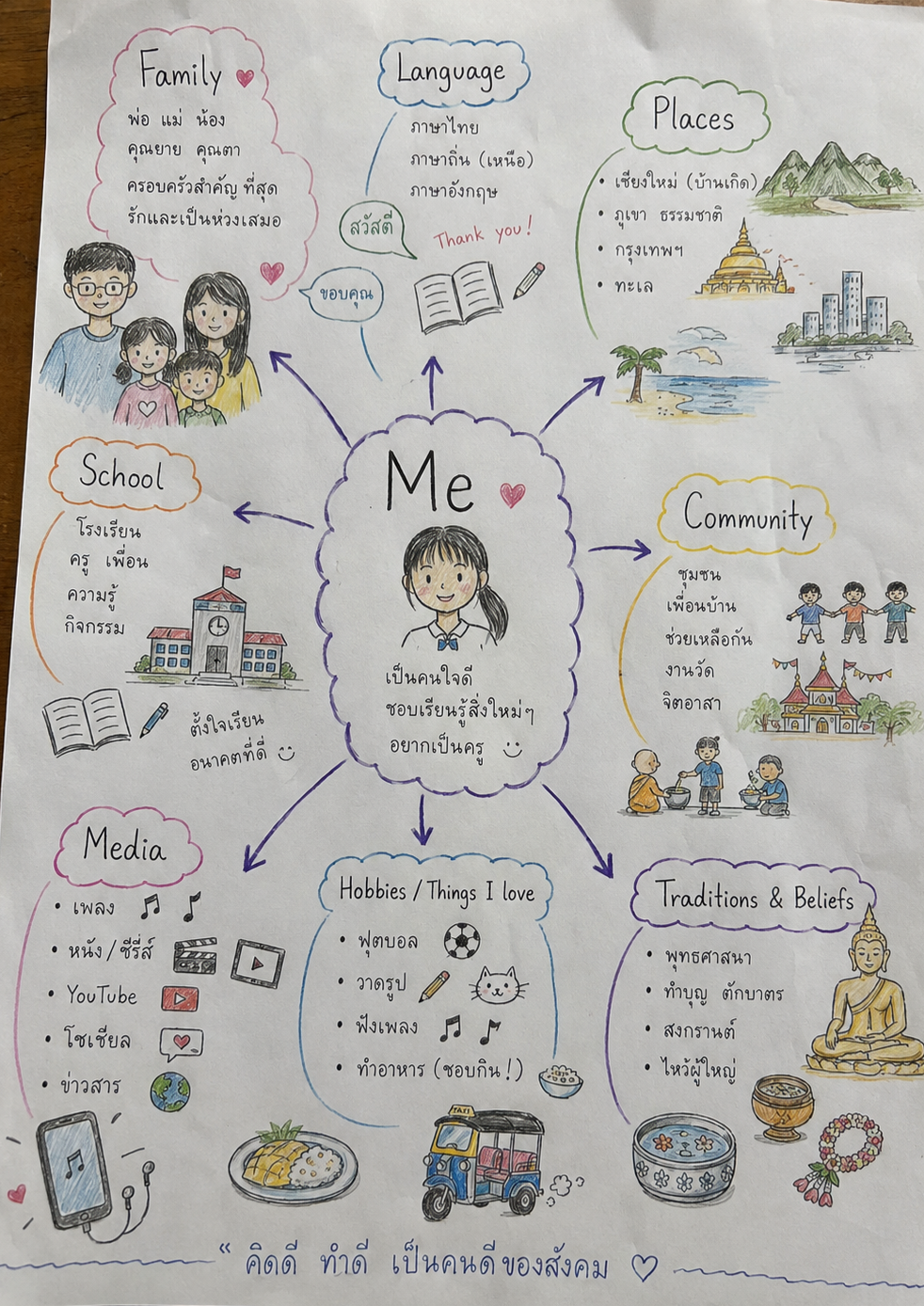
Cultural Influence Map
Explore the experiences and influences that have helped shape who you are becoming.
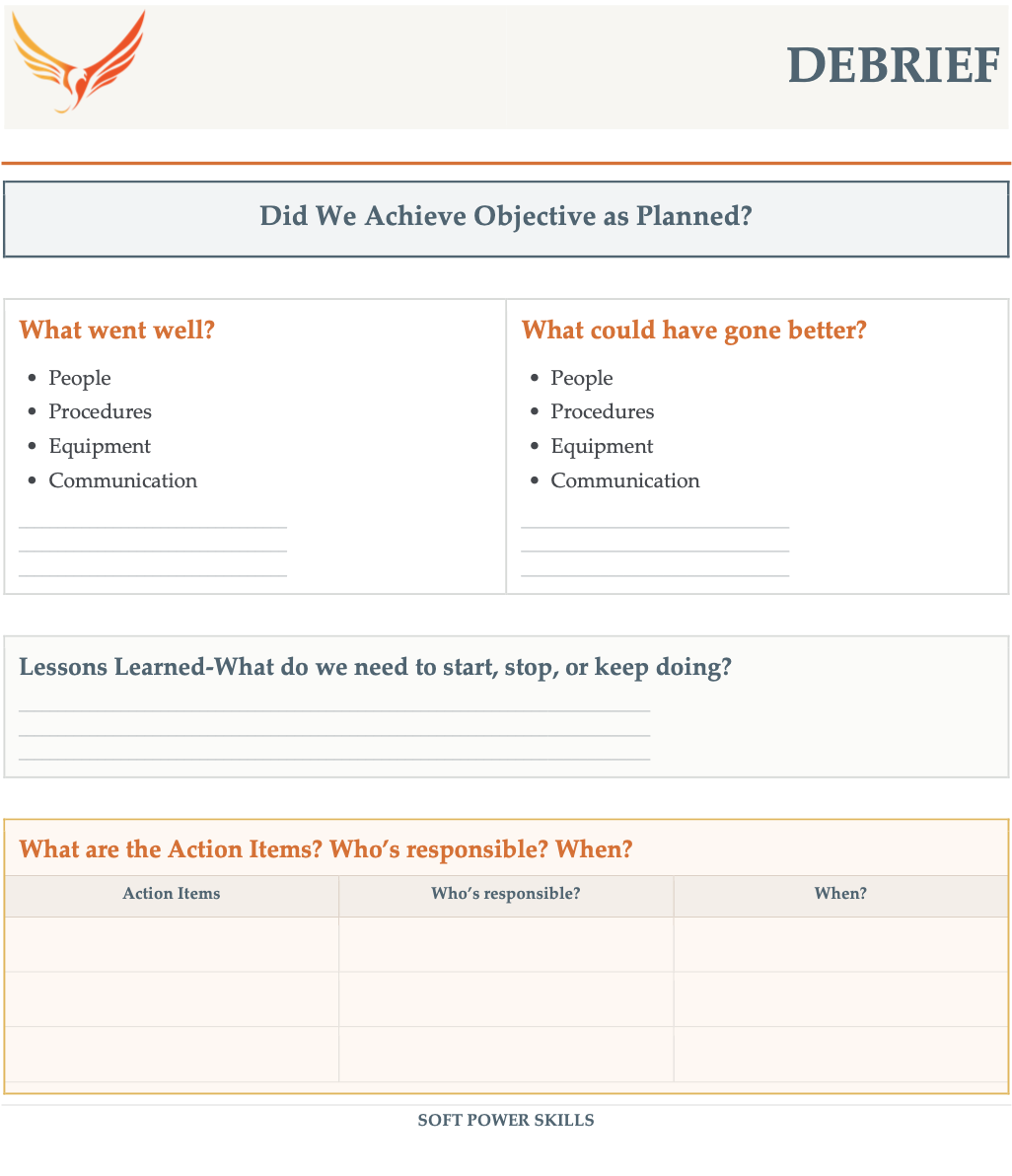
Debrief Guide
Turn experience into learning through better reflection.
Development Plans
Connect personal and leadership goals, priorities, time, habits, accountability, and action.
The specific tools vary by program, age group, and learning goals.
Designed to Complement the School You Already Have
Soft Power Skills is designed to complement the curriculum and student-development programs your school already has.
Programs can fit within existing structures such as:
• Curriculum Enrichment • Advisory or Homeroom • Student Leadership • Activity and Enrichment Days • Service Learning • After-School Programs • Summer Programs • Special Events
The format can be adapted to participant age, group size, available time, learning objectives, and school context.
We begin with a simple question:
What human capabilities would you like your students to develop?
Then we design the experience around those goals.
For Educators & School Leaders
Developing the People Who Develop Students
School culture is shaped intentionally through the everyday actions of the people who lead, teach, coach, and support students.
Soft Power Skills helps schools strengthen that culture by developing the human capabilities of teachers, staff, leadership teams, and other adults who shape the environments in which students learn and grow.
Programs can explore areas such as:
• Giving & Receiving Feedback • Building Effective Teams • Trust & Fairness • Team Climate • Coaching • Better Decisions • Intercultural Communication • Developing Others
Designed Around Your School
Every school community is different.
Age matters. Culture matters. Group size matters. Available time matters. Previous experience matters. Most importantly, what your school wants students to develop matters.
Soft Power Skills programs can therefore be adapted for different ages, schedules, objectives, and school contexts without losing the underlying developmental method.
A 90-minute communication workshop, a full Leadership & Teamwork Day, and a semester-long leadership series may look very different.
The common principle remains:
Experience. Reflect. Understand. Adapt. Apply.
What Could We Develop Together?
Your students already have opportunities to acquire knowledge.
Let's also give them opportunities to practice what it means to lead, communicate, collaborate, make better decisions, understand themselves, work across differences, exercise courage, and positively influence the people around them.
Because the human capabilities students develop today shape what they will be able to do with everything they learn tomorrow.