Trust: A Keystone Element of Leadership
Originally published February 15, 2017 · Revised and updated for Soft Power Skills, August 2026
A Daring Rescue
Hurtling at over 900 kilometers per hour, 10,000 meters above the ground, in a hunk of metal filled with flammable gasoline always has an inherent risk, and even more so when someone is trying to shoot you down. But if aircraft commander Captain Herman L. Byrd and his crew had any fears of surface-to-air missiles threatening to blow them from the sky, they put them aside when they heard the request over the radio from Brigham Control, the ground-controlled interception station at Udorn, Thailand, on March 8, 1967, to enter North Vietnamese enemy territory to save a formation of four F-105 fighter-bombers at great risk of running out of fuel.
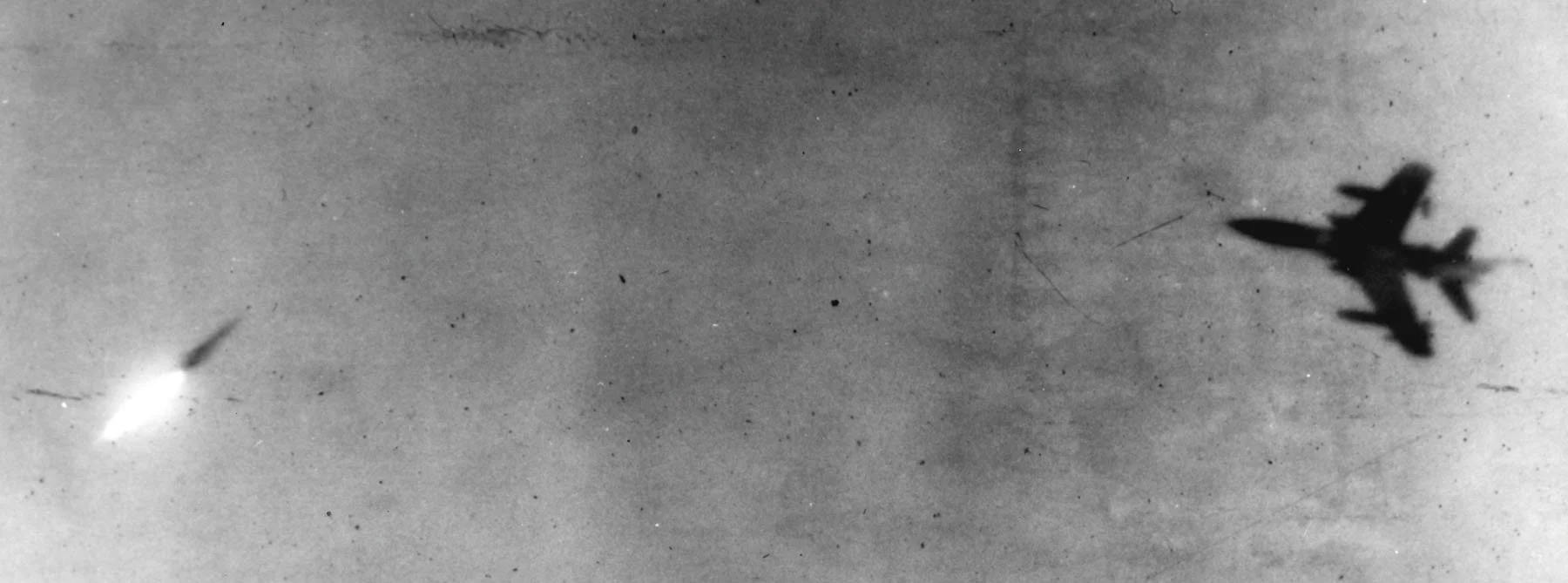
An F-105 Thunderchief attempts to evade an SA-2 surface-to-air missile over North Vietnam. U.S. Air Force photo, public domain.
This was a highly unusual request, to be sure. It was against restrictive tanker rules governing operations that far north. Not only was it physically dangerous, but a pilot and crew could face disciplinary or administrative penalties for breaking regulations. But if the pilots who needed the emergency fuel were forced to eject after their engines flamed out, they faced death, injury, or capture.
Despite the tanker’s vulnerability to flak and surface-to-air missiles, the navigator quickly calculated the right direction and airspeed, and the crew turned their KC-135 air-refueling tanker toward unfriendly skies fraught with danger to give those distressed brothers life-saving fuel. The pressure was high on the crew to make this unplanned trip that required avoiding surface-to-air missile sites while bringing together aircraft traveling at high closure speed.
At just the right moment, Captain Byrd maneuvered their plane into a left turn to roll out just in front of the thirsty fighters, allowing the refueling technician in the back of the tanker to skillfully deliver the fuel in rapid succession to all four aircraft. Perfect crew coordination in the face of danger, disaster averted, and all aircraft returned safely home.
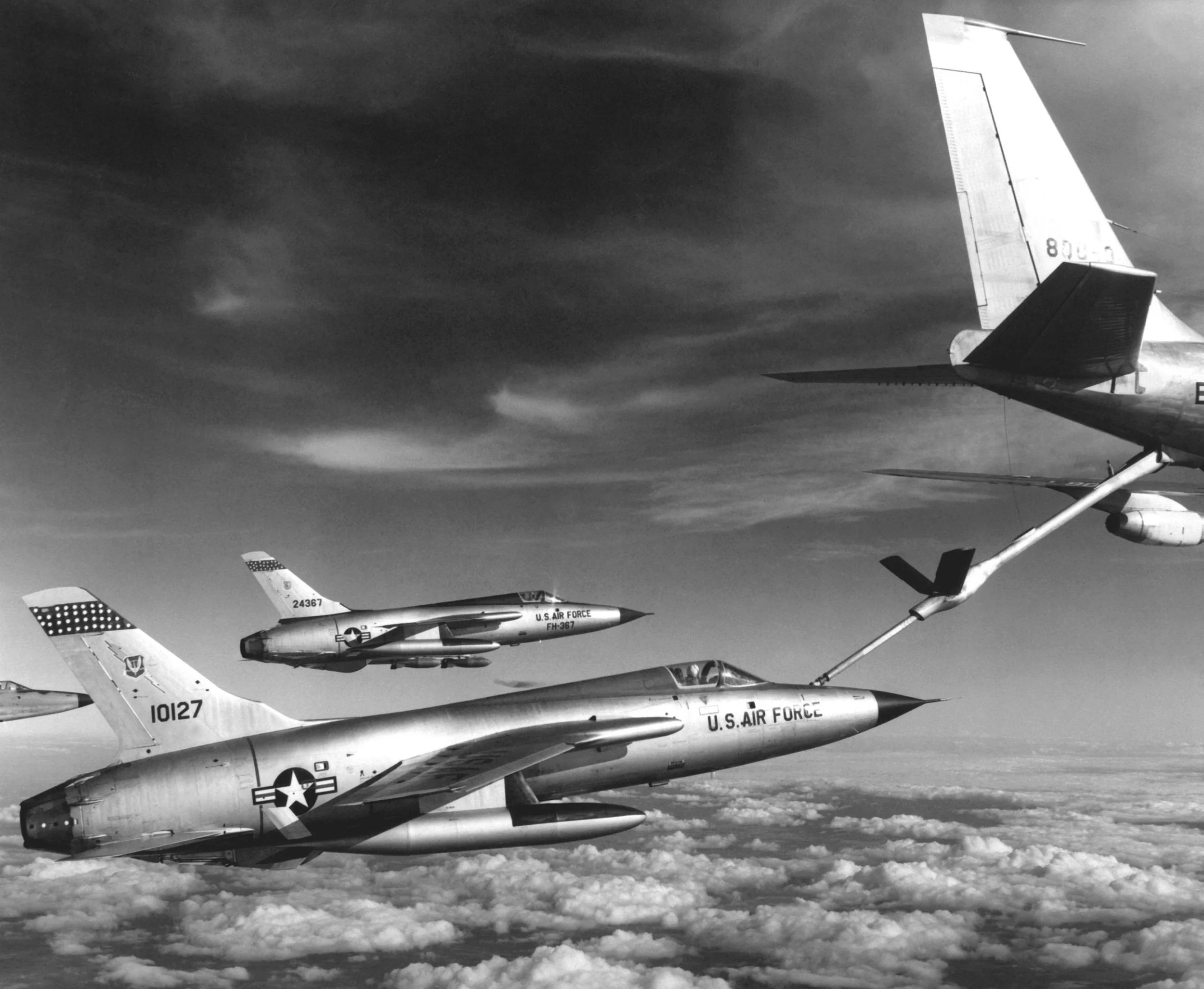
U.S. Air Force F-105 Thunderchiefs refuel from a KC-135 Stratotanker during operations in Southeast Asia, circa 1966. Archival photograph, not the March 8, 1967 Byrd mission. U.S. Air Force photo, public domain.
Trust Is Foundational
Why are people willing to put aside their self-interests and safety in support of a larger cause? Why did Captain Byrd and his crew not hesitate to answer the call that put them in imminent danger? The answer has to do with trust. I believe trust is a keystone element upon which many other leadership traits and skills rely.
How important is trust? Research has consistently associated workplace trust with individual, team, and organizational performance. Stephen M. R. Covey argues that higher trust can increase the speed of business and reduce costs. In Gallup’s May 2026 tracking, only 20% of U.S. employees strongly agreed that they trust the leadership of their organization.
World Values Survey data provide one measure of generalized social trust. In the most recent survey data available for Thailand, collected in 2018, roughly three in ten respondents said that most people could be trusted, while roughly seven in ten substantive responses favored being very careful.
Low trust can also create costs through formal controls and verification. For example, companies incurred significant costs complying with Section 404 of the U.S. Sarbanes-Oxley Act, although estimates varied widely and fell after regulatory reforms in 2007. When employees don’t trust their bosses, when leaders don’t trust their followers, when governments don’t trust companies and private enterprises distrust the government, society and the economy suffer.
Trust Builds Safety
Author and speaker Simon Sinek tells a powerful story of leadership, loyalty, and trust similar to Captain Byrd’s crew in his talk “Why good leaders make you feel safe,” in which he recounts how U.S. Army Captain William Swenson came to earn the military’s highest award, the Medal of Honor. Captain Swenson, according to his medal citation, “distinguished himself by acts of gallantry and intrepidity at the risk of his life above and beyond the call of duty while serving as embedded advisor to the Afghan National Border Police.” In an ambush by more than 60 well-armed enemy fighters, Captain Swenson repeatedly faced lethal enemy fire to assist and evacuate his troops.
Sinek says that when he has asked people we regard as heroes why they would take such risks for others, their answers boil down to one statement: “Because they would have done it for me.”
Creating an environment of mutual trust, in which leaders put the welfare and interests of their team ahead of their own, is key to every type of leadership, whether in military, business, or family—but it’s not simple. As Sinek points out, you can’t just tell someone to “Trust me,” and expect it to happen immediately, because trust is based on feelings and experience as well as reason.
But you can work on trust. You can make it a part of your character, you can build “trust accounts” with your leaders, colleagues, and followers, and you can practice behaviors that build trust in your workplace or family. Those behaviors become especially important when we think about trust not simply as a technique, but as an expression of character.
The Soft Power Skills Connection: Character

Trust is not simply a leadership technique. It grows from character—the values, integrity, consistency, and choices that show teams that they can rely on each other and on the leader.
In the Soft Power Skills Human Development Framework, Character comes after capability because what we can do matters less than how we choose to use that capability. Character is forged through experience, tested under pressure, and revealed in action. Trust is one of the most important outcomes of that process.
Sources & Notes
Walter J. Boyne, “The Young Tigers and Their Friends,” Air Force Magazine, June 1998. Historical source for Captain Herman L. Byrd, the March 8, 1967 mission, Brigham Control at Udorn, and the emergency refueling of four fuel-short F-105s.
National Museum of the U.S. Air Force, SA-2 / F-105 historical photograph. Public-domain U.S. Air Force Image source
Gallup, U.S. employee trust in organizational leadership, May 2026. Source Current benchmark used for the 20% figure in the article.
World Values Survey, Thailand survey data collected in 2018. Source Used here as a measure of generalized interpersonal/social trust, not workplace or leadership trust.
U.S. Securities and Exchange Commission, study of Sarbanes-Oxley Section 404 compliance costs. Source Supports the discussion of formal-control and verification costs; the article intentionally avoids a single aggregate cost estimate.
U.S. Army, Medal of Honor citation for Capt. William D. Swenson. Source Primary source for Swenson’s gallantry during the September 8, 2009 ambush.
Simon Sinek, “Why good leaders make you feel safe,” TED
“Trust Within the Workplace,” Annual Review of Organizational Psychology and Organizational Behavior (2022). Modern scholarly review supporting the broad relationship between workplace trust and individual, team, and organizational outcomes while cautioning against overly simple causal claims.
Stephen M. R. Covey, The Speed of Trust. (2008) Source for the practical argument that higher trust can increase speed and reduce costs.